
Hollow glass blocks and solid glass blocks
Release time:
2026-04-13
Glass blocks are large glass products molded from transparent or colored glass into solid blocks or hollow boxes. The main types include hollow glass blocks and solid glass blocks; mosaics are not included in this category. In most cases, glass blocks are not used as a finishing material, but rather as a structural material for walls, screens, partitions, and similar applications.

Block-shaped, hollow glass products made of clear or colored glass, or block-shaped products with glazed surfaces. The glass bricks currently popular on the market mainly include glass facing bricks, glass mosaic tiles, and hollow glass bricks. Glass bricks account for a significant share of the interior design market and are generally used in high-end spaces to create a dazzling, eye-catching atmosphere. Additionally, due to the inherent properties of glass products, they are widely used in areas requiring natural lighting and waterproofing. Common specifications: Standard bricks (190×190×80 mm), small bricks (145×145×80 mm), thick bricks (190×190×95 mm, 145×145×95 mm), and special-sized bricks (240×240×80 mm, 190×90×80 mm). Market Status: Although both are decorative materials, hollow glass bricks are currently the most commonly used on the market. This is because they can form walls independently without relying on pre-existing finishes, and they can be found in virtually every part of a building. In recent years, with the completion of the 2008 National Aquatics Center (Water Cube) and their extensive use in the 2010 Shanghai World Expo Joint Pavilion, these products have become popular interior and exterior finishing materials. Classification of Glass Bricks: Currently, the glass bricks available on the market are primarily categorized into solid and hollow types. The main varieties include glass facing bricks, glass mosaic tiles, and hollow glass bricks.
Solid Glass Bricks: Solid glass bricks are formed by bonding two glass panels together with a circular recess in the center. Currently, manufacturers of these bricks in China are primarily small-scale workshops. Because these bricks are relatively heavy, they can generally only be installed on walls or mounted on reinforced frame structures, limiting their use to interior decorative walls; consequently, their usage volume is relatively low. These bricks are mostly used in entertainment venues such as KTVs and bars. Solid glass bricks come in a wide variety of colors, mostly without internal patterns, and include types such as frosted glass. Glass floor tiles, commonly known as vitrified tiles, are a type of full-body tile with a polished surface, belonging to the category of full-body tiles. Ceramic tiles with a water absorption rate below 0.5% are classified as vitrified tiles. Polished tiles with a water absorption rate below 0.5% also fall under this category (those with a rate above 0.5% are simply polished tiles, not vitrified tiles). Vitrified polished tiles are produced by applying a mirror-like polish to vitrified tiles. Due to their low water absorption rate, they possess relatively high hardness and are resistant to scratches.

Hollow Glass Blocks
(1) Introduction: Hollow glass blocks are a non-load-bearing decorative material that offers sound insulation, thermal insulation, water resistance, energy efficiency, and excellent light transmission. They are formed by fusing two glass billets together at high temperatures, allowing for diverse design expressions based on the blocks’ dimensions, sizes, patterns, and colors. Depending on the dimensions, they can be used to create straight, curved, or irregular glass walls in residential settings. (2) Composition: The chemical composition of hollow glass blocks consists of high-grade glass sand, soda ash, quartz powder, and other silicate inorganic minerals. The raw materials are melted at high temperatures and undergo precision processing. They contain no radioactive substances or irritating odor-causing elements such as hydrocarbons or aldehydes, and are free of substances harmful to the human body, making them a green building material.

Latest News
Float Glass: A Versatile Material for Architectural Innovation
Float Glass: A Versatile Material for Architectural Innovation Table of Contents What is Float Glass? History and Evolution of Float Glass Unique Properties of Float Glass Applications of Float Glass in Architecture Benefits of Using Float Glass in Architectural Design Sustainability Considerations of Float Glass Future Trends in Float Glass Technology Frequently A
2026-08-26
High-Performance SGP Laminated Glass for Safe, Durable, and Modern Architectural Applications
SGP Laminated Glass provides superior strength, safety, and durability with excellent clarity, ideal for facades, curtain walls, windows, and structural glazing applications.
2026-08-24
How Warm-Edge Spacers Enhance Comfort in Insulating Glass Applications
How Warm-Edge Spacers Enhance Comfort in Insulating Glass Applications Table of Contents 1. Understanding Insulating Glass and Its Importance 2. What Are Warm-Edge Spacers? 3. The Technical Advantages of Warm-Edge Spacers 3.1 Improved Thermal Performance 3.2 Reduced Condensation Risk 4. How Warm-Edge Spacers Enhance Comfort 4.1 Maintaining Ideal Indoor Temperatures 4.2 Sound Insu
2026-08-19

CONTACT US
Email : sales@fullwinglass.com
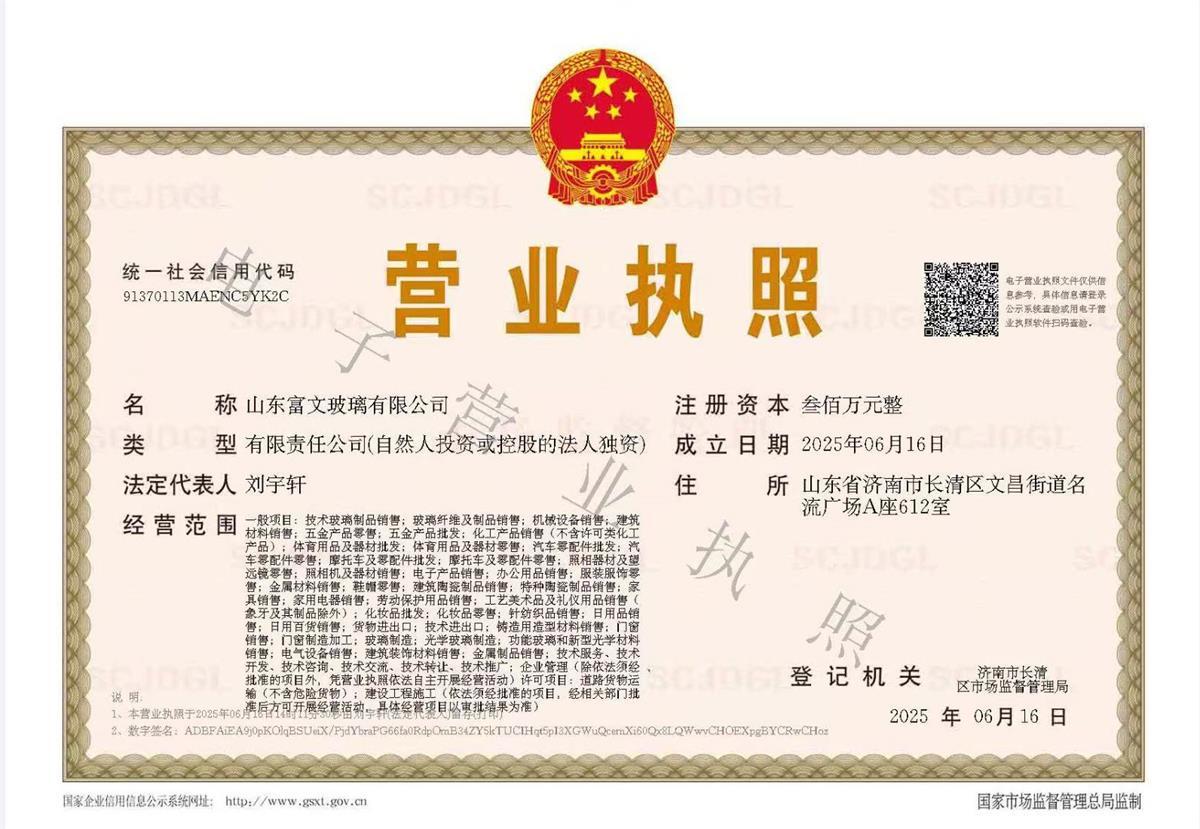
Add : Building A-612 Mingliu Square, Changqing District Jinan City, China

Copyright 2025 : Shandong Fullwin Glass Co.,Ltd. Powered by:CEglobal SEO BUSINESS LICENSE