
Float Glass company
Release time:
2025-11-20
Fullwin Glass: Your professional float glass company, supplying high-quality, clear and tinted glass for architectural and automotive applications worldwide
Clear float glass is a commonly used flat glass:
High surface flatness
High light transmittance
Diverse size specifications
Thickness:3mm-19mm
Common sizes: 1830 * 2440 mm, 2140 * 3300 mm,2440 * 3300 mm, 2140 * 3660 mm, , 2440 * 3660 mm,Or according to customer requirements
Application Fields
Door and window glass: Widely used in doors and windows of residential and commercial buildings, it provides good lighting and vision
Curtain wall glass: Used for building curtain walls, it achieves a transparent visual effect and meets functional requirements such as heat preservation, thermal insulation, and sound insulation.
Window glass: clear glass is often used for side windows and rear windows of automobiles.
Used for making tabletops of furniture such as dining tables and coffee tables, it is easy to clean.

Float glass is the foundational material for much of the modern architectural and manufacturing world, produced through a sophisticated process where molten glass is floated on a bed of molten tin. This method, pioneered in the mid-20th century, results in a product with exceptionally parallel surfaces and a pristine, distortion-free appearance. The high optical clarity of this float glass makes it an ideal starting point for a vast array of end-use products, from simple windows to complex electronic components, underpinning its status as a commodity of critical importance.
One of the most significant benefits of this material is its outstanding optical quality. The nature of the float process creates a sheet of glass that is remarkably flat and uniform in thickness. This characteristic minimizes visual distortion, allowing for clear, true-to-life vision through panes made from this float glass. This superior clarity is not merely an aesthetic advantage; it is a functional necessity for applications like retail storefronts, museum displays, and vehicle windows, where an undistorted view is essential for safety, presentation, and user experience.
Beyond its optical properties, float glass serves as a remarkably versatile substrate for further processing. Its consistent composition and surface quality make it perfectly suited for secondary treatments such as tempering, laminating, coating, and bending. It is this base float glass that is transformed into safety glass for automotive windshields, toughened glass for building facades, and low-emissivity glass for energy-efficient windows. This adaptability allows it to meet a wide spectrum of performance requirements across different industries.
The production process for float glass also allows for consistent control over its thickness and dimensions, which contributes to its structural predictability. Manufacturers can produce this float glass in a range of standardized thicknesses to suit various load-bearing and design needs. This consistency is crucial for architects and engineers who rely on the material's known performance characteristics when designing structures, ensuring that the glazing elements perform as expected under specific environmental stresses like wind pressure.
Latest News
Ultra Clear Glass Made Easy for Your Project
Image Source: statics.mylandingpages.co Ultra clear glass contains very low iron content, so it stays crystal clear instead of showing a green tint. This higher transparency and true color rendering means whatever sits behind the glass looks exactly as it should. Conventional clear glass has more iron, which adds a slight green tint and dull
2026-10-01
Top 10 Float Glass Applications in Modern Architecture 2026 - Mannlee
Image Source: statics.mylandingpages.co Architectural float glass serves a wide range of applications: glass curtain walls, energy-efficient windows, skylights, interior partitions, solar control float glass, smart glass, structural glass, glass balustrades, glass floors, decorative glass. It dominates contemporary architecture and evolves w
2026-09-24
Painted Glass vs. Traditional Glass: Understanding the Key Differences and Applications
Painted Glass vs. Traditional Glass: Understanding the Key Differences and Applications Table of Contents 1. Introduction to Glass Types 2. What is Traditional Glass? 3. What is Painted Glass? 4. Key Differences Between Painted Glass and Traditional Glass 5. Advantages of Painted Glass 6. Applications of Painted Glass and Traditional Glass 7. Maintenance and Care for B
2026-09-23

CONTACT US
Email : sales@fullwinglass.com
Add : Building A-612 Mingliu Square, Changqing District Jinan City, China

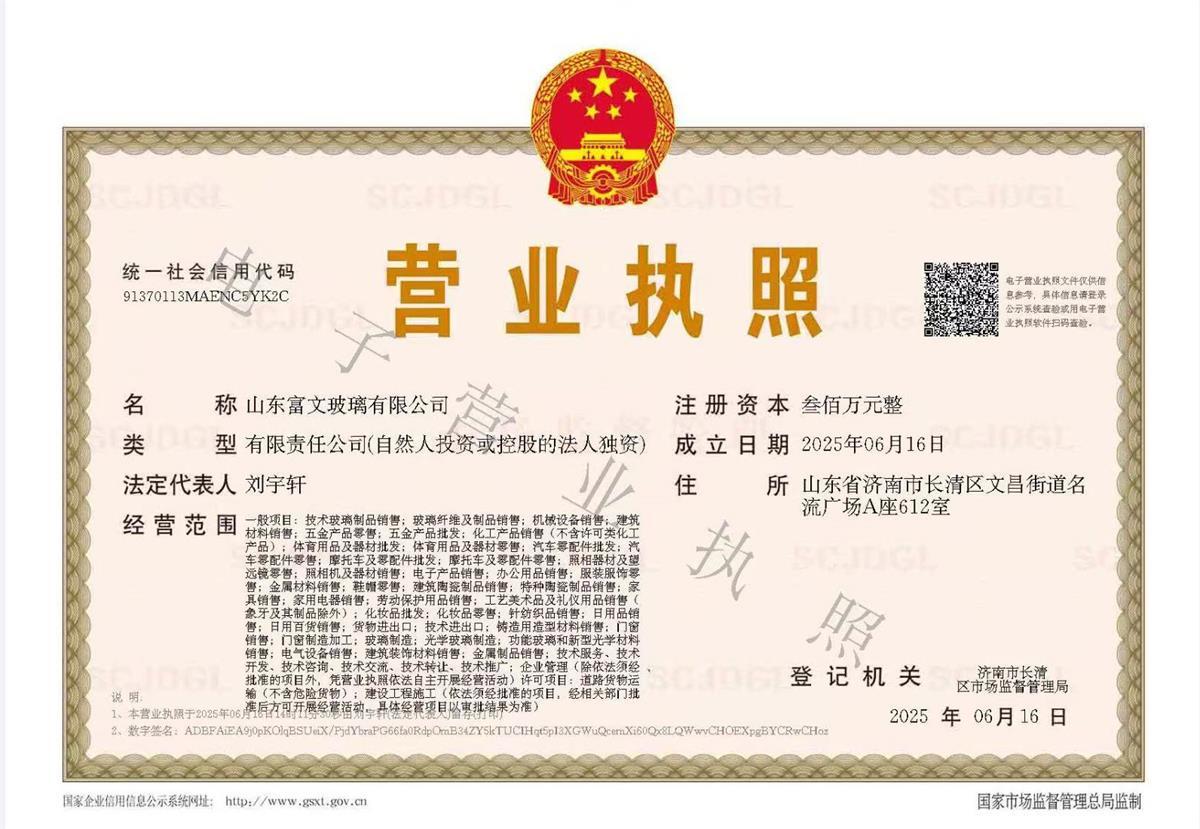
Copyright 2025 : Shandong Fullwin Glass Co.,Ltd. Powered by:CEglobal SEO BUSINESS LICENSE